15 Must-Have Signs for July Events: Elevate Your Celebrations with Stunning Signage
July 22, 2024
In real estate, half the game is visibility.
A property may be listed online, photographed well, and priced correctly, but sometimes the first real moment of attention still happens on the street. Someone drives past a house and notices a board. Someone sees an arrow at the corner and follows it to an open house. Someone passing through the neighborhood realizes a property nearby is available.
That is why real estate signs still matter. They are simple, but they do a job that digital listings cannot always do by themselves. They put the property in front of people who are already nearby. They make the listing feel active. They guide buyers, support agents, and create trust in a very direct way.
This real estate sign guide breaks down the main types, materials, sizes, and best uses so you can choose signs that actually help the property get noticed.
Online property platforms are important, obviously. Most buyers will check photos, prices, locations, and details online before making a serious decision. But physical signs still have their own place.
Good real estate signage catches local attention. Not everyone who sees a sign is actively searching that day, but the right property in the right location can still create curiosity. A neighbor may tell a friend. A passerby may photograph the number. A buyer may decide to check the listing later.
That is the quiet strength of signs. They keep working in the background.
They also help the agent look more present. A clean board outside a property says the listing is being actively marketed, not just sitting online waiting to be found.
Different properties need different signs. A single yard sign may be enough for one listing, while another property may need arrows, banners, flags, and rider signs around it.
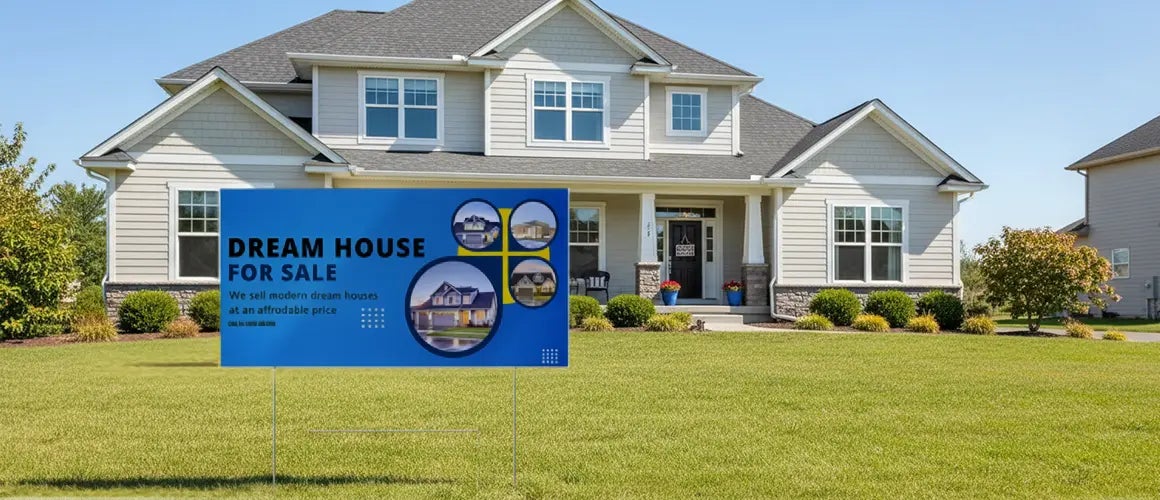
Yard signs are the classic option. They sit outside the property and tell people straight away that the home or space is for sale, for lease, or open for viewing.
Real estate yard signs usually carry the agent’s name, company branding, contact number, and the main listing message. They work because people already know how to read them. No explanation needed.
Sometimes the property is not easy to find from the main road. That is where directional arrow signs help.
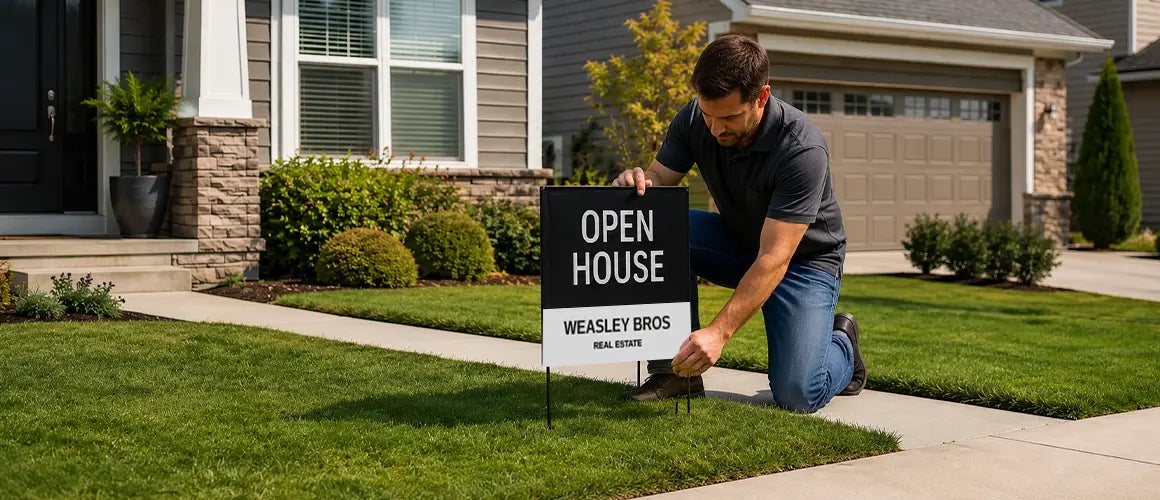
These signs guide people from nearby roads, intersections, or entry points towards the listing. During open houses, they can make a big difference because visitors should not have to keep checking maps at every turn.
Arrow yard signs are especially useful in residential lanes, gated communities, and areas where the property is tucked away from direct traffic.
For larger properties, commercial spaces, new developments, or high-visibility locations, real estate banners can work better than small boards.
They offer more space, which means the message can be bigger and easier to spot from a distance. A banner also feels more noticeable on fences, building fronts, or large open plots.
Sometimes you do not need more information. You need more attention.
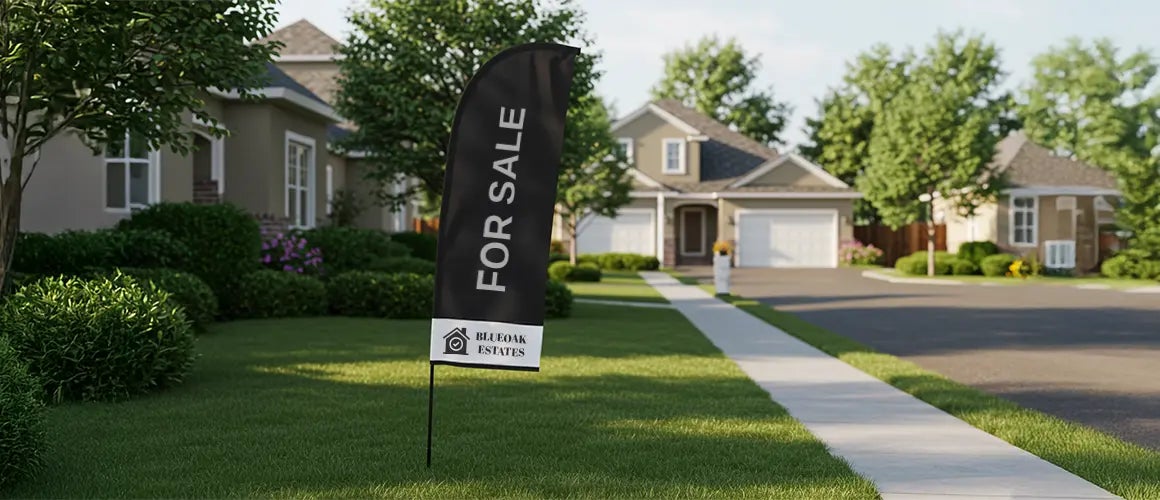
That is where a pre-printed for lease feather flag can be useful. Flags move with the wind, and that movement naturally catches the eye. They work well outside leasing offices, open plots, commercial spaces, and roadside properties.
They are not meant for long details. They are meant to make people look.
These are the straightforward signs that say “For Sale,” “For Lease,” “Sold,” or “Available.” They are direct, familiar, and still one of the most useful tools in property marketing.
Rider signs are the smaller add-ons placed above or below the main sign. They might say “Open House,” “New Listing,” “Under Contract,” “Price Reduced,” or “Sold.”
Instead of replacing the whole sign, you can update the status with a rider. Simple, practical, and useful.
Material choice matters because property signs usually live outdoors. Sun, rain, dust, wind, and regular handling can all affect how the sign looks over time.
Corrugated plastic is lightweight, affordable, and widely used for temporary signs. It is a practical option for open houses, directional signs, short-term listings, and quick campaigns.
It is easy to install, easy to move, and easy to replace.
Aluminum is stronger and more durable. It works well for longer-term listings, premium properties, or commercial sites where the sign needs to look professional for a longer period.
It handles outdoor conditions better and gives a cleaner, more permanent feel.
PVC sits somewhere between lightweight plastic and heavier rigid materials. It looks cleaner than basic corrugated plastic and works well for medium-term use.
Custom vinyl banners are a good choice when you need maximum visibility. It works well on fences, building fronts, construction sites, and large plots where smaller signs may not be enough.
Flags are usually made from lightweight fabric because they need to move. That movement is part of what makes them visible, especially outdoors.
The best real estate sign materials depend on how long the sign will stay up, where it will be placed, and how polished the final presentation needs to feel.
There is no single perfect size for every property. The right size depends on the location, traffic, viewing distance, and amount of information on the sign.
Common real estate sign sizes for yard signs include:
The smaller size works well for local streets and walk-by visibility. The larger one is better when people need to read the sign from a car.
Directional signs are usually smaller because they only need to show an arrow and a short message.
Common sizes include:
The message should be quick. Arrow, open house, company name, maybe a phone number. That is enough.
Banners are usually much larger:
These work well for commercial properties, fences, building fronts, or open land.
Feather flags often range from around 8 ft to 15 ft tall. The height helps them stand out from surrounding signs and parked vehicles.
The size should always match the viewing distance. If people are driving past, bigger and simpler usually works better.
A good real estate sign design is not about adding everything. It is about making the important things easy to see.
Most people will look at a sign for only a few seconds. Some will be driving. Some will be walking. Either way, the message needs to land fast.
A strong design usually includes:
Avoid tiny text, too many fonts, weak colors, and long descriptions. A real estate sign is not a brochure. It is a quick signal.
Yard signs work best directly outside the property. They are the main marker.
Directional signs are best for guiding people from nearby roads or intersections.
Banners are useful for bigger spaces, commercial properties, and places where distance visibility matters.
Feather flags are best when you want movement and attention.
Rider signs are useful for quick updates without replacing the main board.
The smartest setup often uses more than one sign. A yard sign at the property, arrows nearby, and a banner or flag for bigger visibility can work together nicely.
A good sign in the wrong place will not do much.
Place signs where people can see them early enough to react. For drivers, that matters a lot. If the sign appears right at the turn, it may be too late. Place directional signs before the turn so people have time to slow down or change lanes.
Avoid trees, parked cars, walls, and poles blocking the view. Also think about height. Too low, and the sign disappears. Too high, and it may not feel connected to the property.
For yard signs, face the main direction of traffic. For open houses, use arrows from the nearest main road. For banners, choose a flat visible surface where the message will not wrinkle or fold.
The most common mistake is trying to say too much.
A sign does not need the entire property description. It needs the main message and a clear next step.
Other mistakes include:
Most of these are easy to avoid if you think like the person passing by. What will they actually notice in three seconds?
A buyer might see an arrow sign first, then the yard sign, then the agent’s office branding later. If all the signs look connected, the whole experience feels more professional.
Same colors. Same fonts. Same logo placement. Same tone.
That kind of consistency builds recognition. It also makes the agent or agency look more organized.
Real estate signs may look simple, but they still play a serious role in property marketing.
They create street-level attention, guide potential buyers, support open houses, and help listings feel active in the real world. Digital platforms may carry the full listing, but signs often create the first spark of curiosity.
The right sign depends on the property, location, viewing distance, and goal. Yard signs, arrows, banners, flags, and riders all have their place.
A good sign does not need to say everything.
It just needs to make the right people stop, look, and take the next step.
A bakery owner ordered a large banner for a weekend sale. It arrived on Thursday, was installed on Friday, and…
The Friday before Black Friday, a shop owner stood outside his store looking at his window. Everything was marked down…
Most event organizers know this moment. The venue is booked, the guest list is growing, and then someone realizes the…
There are two kinds of shop windows. The first one makes you slow down. The second one makes you wonder…
Black Friday is a major opportunity for businesses to attract new customers, increase revenue, and prepare for the holiday shopping…
Selecting proper visual displays for outdoor events, retail storefronts, or trade shows can make or break your foot traffic. Outdoor…