Yard signs are one of those products people only notice when they need them. Then suddenly, they are everywhere.
You see them outside homes for sale, in front of local businesses, during elections, near wedding venues, outside construction sites, and on street corners pointing people in the right direction. They are simple, direct, and surprisingly useful for something that usually lasts just a few words and a basic stand.
That is exactly why they work.
A good yard sign does not try to do too much. It gives people a message they can catch quickly and remember. Sometimes that message is promotional. Sometimes it is directional. Sometimes it is personal. But in every case, the goal is the same: get noticed fast.
This guide breaks down the main types of yard signs, materials, sizes, and best uses so you can choose the right custom yard signs for your business, event, property, or promotion.
What Yard Signs Are Actually Used for
At the simplest level, yard signs are outdoor signs placed close to the ground to advertise, guide, announce, or identify something.
That sounds broad because it is. Their biggest strength is versatility.
A small business may use custom signs to promote an offer, attract local customers, and improve visibility. A real estate agent may use them to mark a listing. A family may use them to guide guests to a wedding venue. A political campaign may use them for name recognition. A contractor may place one outside a worksite to show who is handling the job.
Because they are lightweight and easy to place, they work well for local visibility. They are not meant to replace larger signs or banners. They are meant to be quick, practical, and easy to understand.
Common Types of Yard Signs
Not every yard sign is doing the same job, so it helps to look at them by use.
Yard Signs for Business
Yard signs for business are usually used when a company wants local attention without spending much on setup. They can promote services, highlight seasonal deals, announce a grand opening, or simply make the business easier to notice.
These signs are especially useful for local service providers. A tutor, salon, cleaning company, repair service, bakery, or cafe can all use yard signs to create visibility in the exact area where they want to be known.
That is why business advertising yard signs still make sense. They are low effort, affordable, and easy to place where people are already passing by.
Real Estate Yard Signs
This is one of the most familiar categories. Real estate yard signs are designed to help people notice listings right where they are. Whether it says “For Sale,” “For Lease,” or “Open House,” the purpose is immediate recognition.
These signs often include contact details and agency branding, but the main message is usually the largest part of the layout. It has to be readable from the road, not just from the pavement.
Political Yard Signs
Political yard signs are built around repetition. The point is not to explain everything. The point is to build familiarity. A name, a slogan, or a position repeated across multiple streets does more than a crowded sign ever will.
These are often printed in bulk because visibility comes from quantity as much as design.
Wedding and Event Signs
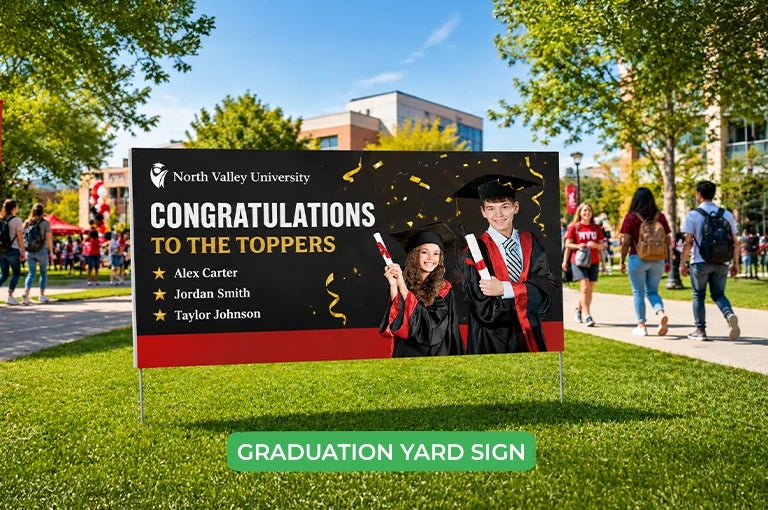
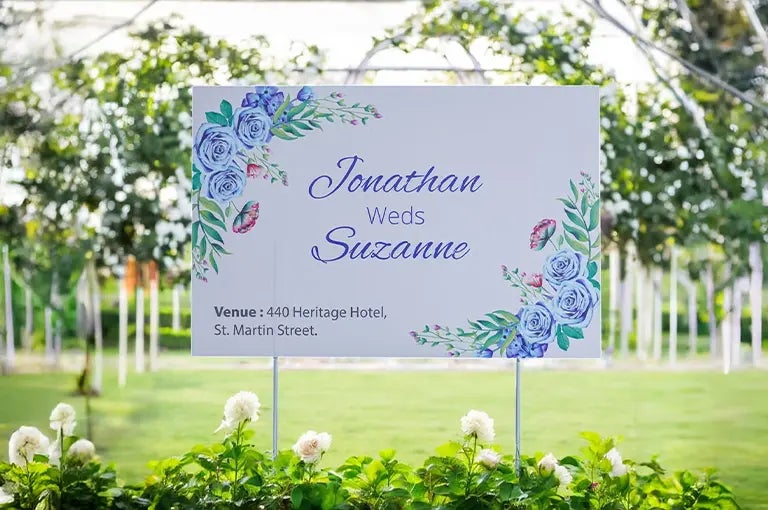
Yard signs also work well for events. Custom wedding signs are often used for directions, welcome messaging, parking guidance, or venue marking. The same basic format works for birthdays, baby showers, graduation parties, and school events.
These signs tend to feel more decorative or personal than promotional, but they rely on the same practical setup.
Die-Cut Yard Signs
Sometimes a regular rectangle is enough. Sometimes it is not. Die cut yard signs are useful when the shape itself adds something to the message. They are often used for themed events, branded promotions, or businesses that want something less generic.
They are not necessary for every order, but they do help when visual identity matters more.
What Are Yard Signs Made of
One of the most common questions buyers ask is what are yard signs made of.
Most are made from corrugated plastic. This is the standard material for a reason. It is light, cost-effective, easy to print on, and suitable for outdoor advertising. It gives you a solid balance between practicality and price.
That is also why corrugated plastic is often seen as the best material for yard signs for everyday needs. It does not try to be permanent. It just does the job well for short to medium-term outdoor display.
For most local advertising, real estate use, event signage, and campaign work, that is exactly what people need.
Yard Sign Materials and Why They Matter

Different yard sign materials affect how the sign feels, how long it lasts, and how easy it is to handle.
Corrugated plastic is popular because it makes the whole process easier. The signs are light enough to carry in quantity, easy to install with stakes, and practical for repeated short-term use. That is why so many businesses and event organizers rely on them.
Material matters most when you think about use. If the sign is meant for a weekend event, an open house, a local promotion, or campaign visibility, you do not need something heavy-duty and expensive. You need something readable and reliable.
That is where corrugated plastic wins.
Yard Sign Size and How to Think About It
The yard sign size you choose affects visibility more than design ever will.
A sign can look great on screen and still fail if the size is too small for the location. On the other hand, a sign does not need to be huge to work well. It just needs to match the distance from which people will first read it.
If the sign is aimed at people walking past, a smaller size may be enough. If it needs to be read from a moving car, you usually need something larger and simpler.
That is why size depends more on placement than on preference.
A simple yard sign size chart
Here is a practical yard sign size chart
| Size | Best for |
| 12″ x 18″ | Event directions, walk-by visibility, smaller announcements |
| 18″ x 24″ | General promotions, real estate, campaign signs |
| 24″ x 36″ | Stronger roadside visibility, larger promotional messages |
A small sign can work beautifully if the audience is close. A medium-sized sign is usually the safest all-round option. A larger one helps when the sign needs to compete with distance, traffic, or clutter in the environment.
How to Choose a Yard Sign
If you are wondering how to choose a yard sign, start with purpose.
What exactly is the sign supposed to do? Sell a property? Promote a business? Guide people to a venue? Mark a campaign presence? Once that part is clear, everything else gets easier.
Then think about location. Where will the sign be placed, and how quickly will people see it? A quiet neighborhood lane and a roadside edge are two very different environments.
Next comes size. Use visibility as the deciding factor, not guesswork.
Then think about the message. Yard signs work best when the wording is short. Too much text makes them harder to read, and most people are only giving them a few seconds of attention.
Finally, think about quantity. One sign can help, but multiple signs often do more, especially when awareness matters.
How to Install Yard Signs

People often overthink how to install yard signs, but the process is usually simple.
Most signs are installed using H-stakes. The stake slides into the sign and then into the ground, which keeps the display upright without much effort. The main thing is not the hardware. It is the placement.
A sign works best when it is facing the direction people are coming from and sitting in a clear line of sight. Tall grass, parked cars, bushes, or poorly chosen angles can make even a good sign ineffective.
For directional signs, placement is even more important. People need enough time to see the arrow and respond. If the sign appears too late, it loses value.
So yes, the installation is easy. The real work is choosing the right spot.
What Makes a Yard Sign Actually Effective
A good yard sign is usually a simple one.
It needs readable text, clear contrast, and a layout that works at a glance. If people need to stop and study it, the design is probably doing too much. This is especially true with custom yard signs. The temptation is to add extra details because the sign is yours to personalize. But the best results usually come from restraint. One clear message almost always performs better than five smaller ones fighting for space.
That is why the strongest signs often feel obvious. They say exactly what they need to say and nothing more.
Final Thoughts
Yard signs stay useful because they solve a simple problem well.
They help people notice something quickly, whether that is a business, a property, a political name, a wedding entrance, or a directional message. They are easy to place, easy to understand, and flexible enough to work across a lot of situations.
Once you understand the basics of yard sign size, yard sign materials, what they are made of, how to install them, and how to choose the right style, the whole process becomes a lot easier.