
A Guide to Political Yard Signs
March 14, 2023
Yard signs are a cost-effective and versatile way to get your message across whether you’re promoting a local event, supporting a political campaign, advertising a business, or announcing a real estate listing. But while the design of your sign matters, the way you place it can make or break its impact.
Knowing the best placement for yard signs isn’t just about staking them into the ground. It involves understanding visibility, readability, local rules, weather impact, and even the psychology of passersby. In this guide, we’ll explore everything you need to know about yard sign placement, from practical dos and don’ts to smart tips for securing outdoor signs in windy weather.
Let’s break it down.
Outdoor signs, especially yard signs, often function as the first point of contact with your audience. If your sign is tucked away behind a bush or placed too low to catch attention, it’s a wasted opportunity. Whether you’re using a business yard sign, real estate yard sign, or even a custom sign for a special promotion, the goal is the same maximum visibility and impact.
Good yard sign placement carries your message further, while poor placement renders even the most beautifully designed signs ineffective.
Let’s start with what you should always do when setting up your yard signs.
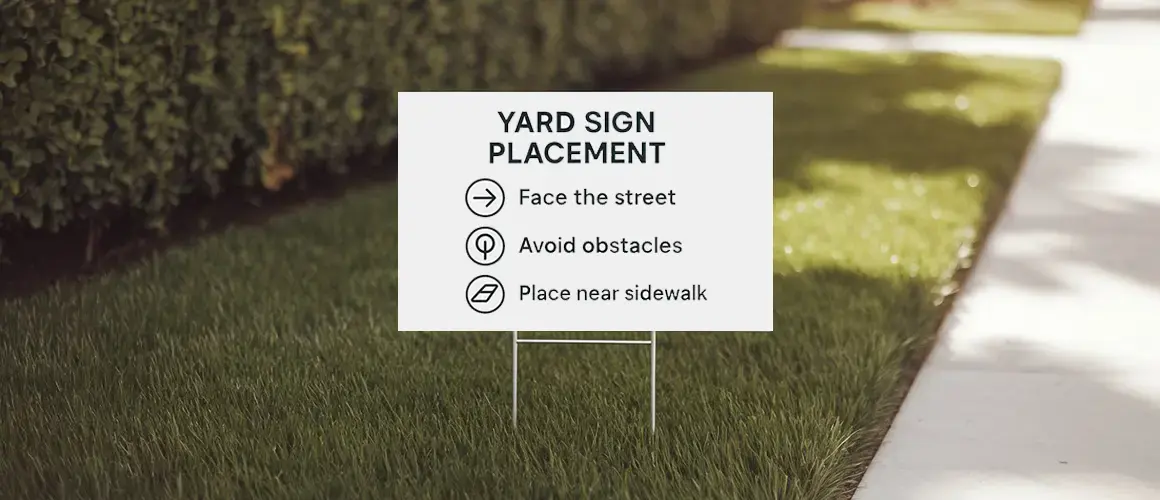
The number one rule? If they can’t see it, they won’t read it. The best placement for yard signs is where they are clearly visible from the street or sidewalk without any obstructions.
Before you hammer that stake into the ground, check your local yard sign regulations and restrictions. Some municipalities have very specific rules about:
Not following these regulations could result in your sign being removed or worse, fines.
An ideal yard sign should be at eye level for the target audience. For car drivers, that means lower signs closer to the curb. For pedestrians, a slightly higher placement might work better. Always test visibility from different angles and distances before finalizing the spot.
If your sign contains arrows or directions, make sure they make sense from the viewer’s perspective. Nothing confuses more than a directional sign pointing to nowhere.
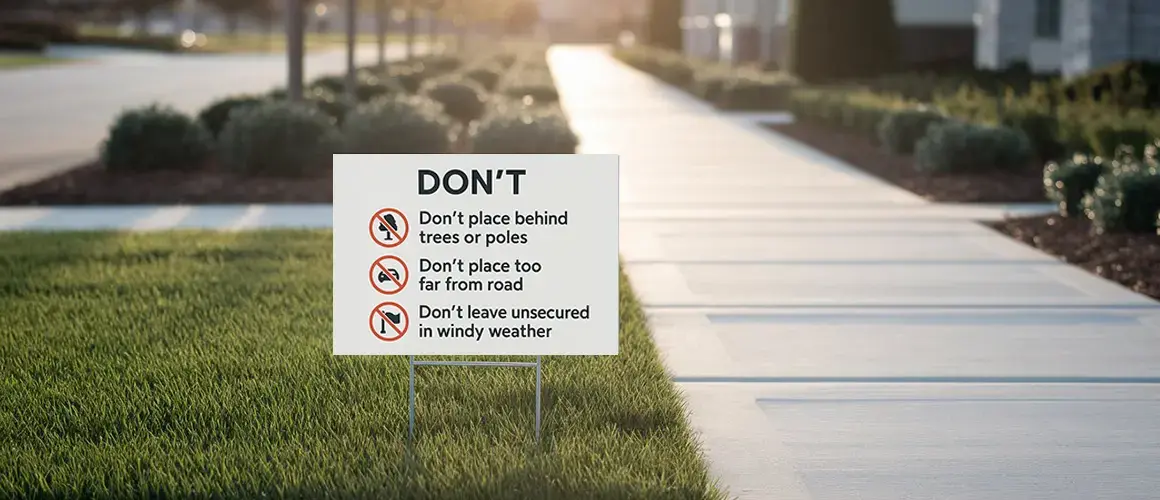
Wind and weather are the enemies of flimsy signage. Investing in a solid support system will keep your message standing tall. Some tips for securing outdoor signs in windy weather:
Properly anchored signs not only look professional but also prevent hazards like signs flying into traffic.
Now that we’ve covered the best practices, here’s what to avoid.
Never place signs on land you don’t own or have permission to use. This is a fast way to lose your sign and possibly spark legal trouble.
Too many signs clustered in a single area make it hard for any one message to stand out. It can also look unprofessional or cluttered.
Even if your placement is great, a poorly designed or hard-to-read sign is ineffective. When planning your placement, test how easy it is to read your message from the intended distance.
Leaving yard signs up long after the event or sale ends looks unprofessional and may violate local ordinances. Make a habit of removing signs promptly.
Sometimes it’s the small tweaks that make the biggest difference. Here are a few signage visibility tips to optimize your placement further:
Let’s break down how yard sign placement can vary depending on your purpose.
These need to be both attractive and directive. Use arrows, clearly marked addresses, and place them close to the curb or driveway entrance. Open house signs should be visible from all entry points to the street.
For local businesses, placement near intersections or storefronts works best. If your business is off the main road, consider using signs on nearby high-traffic corners with clear arrows and your business name.
For semi-permanent placement:
These must adhere strictly to city ordinances. They often require specific heights, reflectivity, and spacing from curbs. Don’t compromise on these—incorrectly placed parking signs or street signs can lead to liability issues.
It’s easy to overlook details in the rush of promotion. Here are a few common mistakes in yard sign placement to avoid:
Outdoor signs do more than just deliver a message, they visually represent your purpose, brand, or campaign. Mastering how to place yard signs for maximum visibility isn’t just about following a checklist; it’s about thinking strategically.
By taking time to analyze your outdoor space, understanding yard sign regulations and restrictions, and applying smart signage visibility tips, you give your message a much better chance of standing out.
Whether you’re placing a real estate yard sign, a custom sign for your café’s grand opening, or a business yard sign that needs to weather the elements, thoughtful placement can make all the difference.
Looking to create eye-catching signage for your next campaign? Explore our range of custom signs and yard signs that combine quality materials with proven performance.
Choosing the right canopy tent size is about more than finding a tent that fits your event space. You also…
For landowners, the nuisance of potential trespassers and the liability that comes with them is a real concern. Because of…
Outdoor vinyl stickers are an excellent choice for durability and aesthetics, but many users face the challenge of maintaining their…
Have you ever printed a banner, poster, or sign and found that the image looked blurry or pixelated? This happens…
For landowners, the threat of trespassers and the associated liability is a serious concern. To mitigate this risk, many property…
Choosing the right step and repeat banner size can make a big difference in how your event photos look. A…