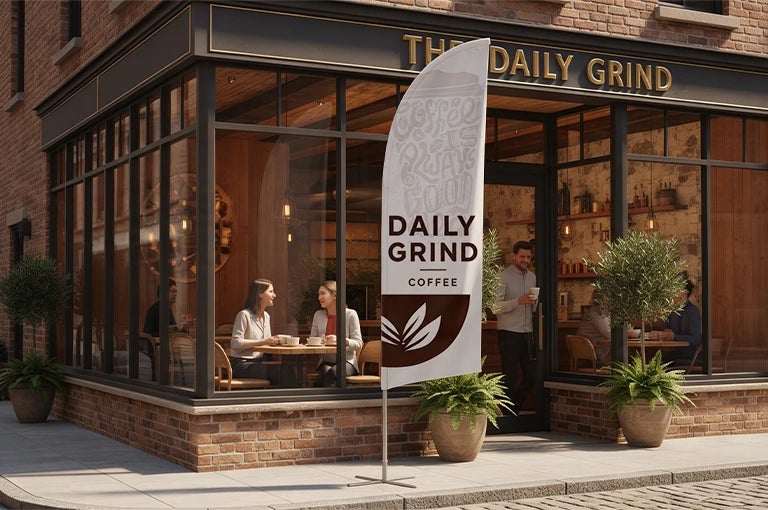
Selecting proper visual displays for outdoor events, retail storefronts, or trade shows can make or break your foot traffic. Outdoor advertising flags grab attention fast. But if you pick the wrong shape, you end up with hidden costs or text nobody can read. Understanding how different flag shapes work helps you pick a style that fits your brand while staying sturdy when the wind picks up.
In this guide, we break down the most popular flag contours. We’ll compare their wind resistance, print area, and where they work best so you can make a smart choice for your next campaign.
Why Does Advertising Flag Shape Matter for Branding?
The silhouette of a flag for advertising isn’t just about looks. The shape actually dictates how fabric moves in a breeze, how tight the display stays, and whether people driving by can read your phone number.
A tight, high-tension flag keeps text crisp even when there isn’t any wind. On the flip side, fluttering fabric draws eyes in crowded outdoor spaces. Finding a shape that balances structural stability with readability ensures your marketing stays clear and professional under any conditions.
What Are the Primary Advertising Flag Types Available?
Different advertising flag types serve different locations and business goals. Here is a realistic look at the most common options available today.
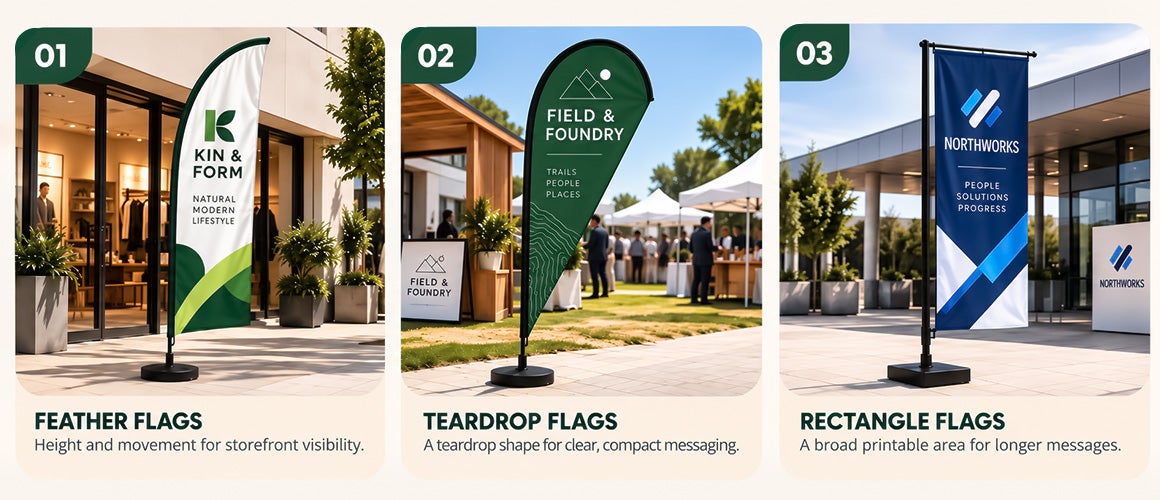
1. Feather Flags
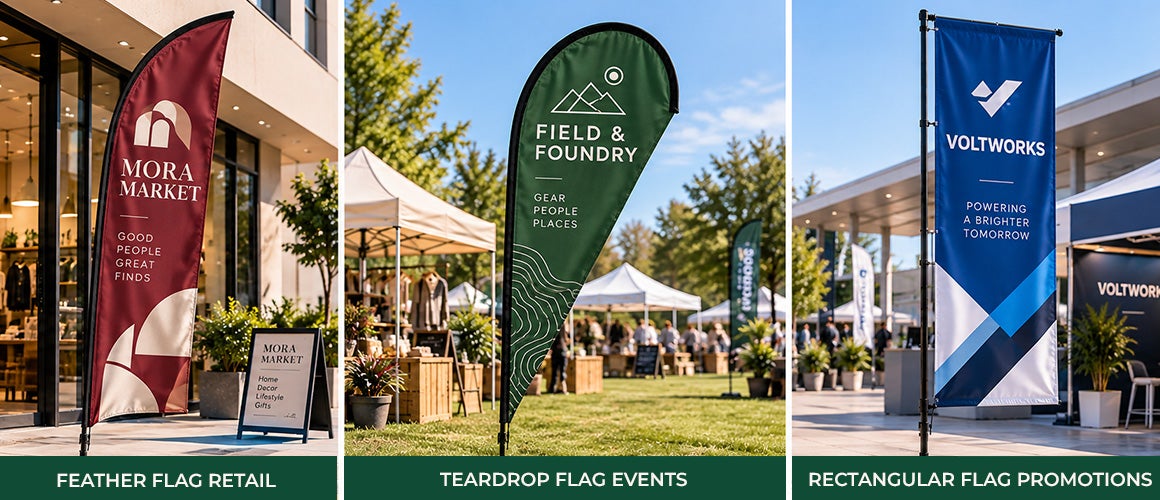
Known for their smooth, sweeping curve along the top edge, feather flags give you a solid mix of height and organic motion. That top curve lets the fabric flutter gently in a light breeze while keeping enough vertical surface rigid for big logos and stacked text.
2. Teardrop Flags
Built for maximum fabric tension, teardrop flags pull material super tight across a teardrop-shaped pole frame. Because the canvas never sags, your graphics stay completely flat and readable whether you’re inside a calm convention center or outside in heavy wind.
3. Rectangle Flags
Featuring a clean four-cornered canvas held up by an extended top arm, rectangle flags offer the absolute largest printable surface. They work best if you have long business names, website links, or detailed graphics that need straight horizontal lines.
4. Blade Flags
With a sharp, straight vertical cut that tapers down toward the base, blade flags bring a modern, executive look. They fit neatly into tight sidewalk spots, grand entranceways, and packed trade show aisles where floor space is limited.
5. Sail Flags
Modeled after windsurfing sails, sail flags feature an aggressive, aerodynamic curve that cuts through strong gusts easily. Their sharp angle creates a high-energy look that stands out around car dealerships, sports venues, and beach events.
How Do Different Flag Shapes Compare Side by Side?
| Flag Shape | Best For | Print Surface Area | Wind Performance | Tension Level |
| Feather | Storefronts & Sidewalks | Moderate / High | Excellent | Medium |
| Teardrop | Indoor Expos & Windy Zones | Compact / High Focus | Outstanding | Very High |
| Rectangle | Full Text & Long Logos | Maximum | Good | Medium-Low |
| Blade | Modern Aesthetics & Entrances | High Vertical | Very Good | High |
| Sail | Outdoor Events & Sports | Moderate Aerodynamic | Superior | Medium-High |
How to Select the Ideal Flag Shape for Your Brand?
When you order custom flags, keep these real-world factors in mind before sending your order to print:
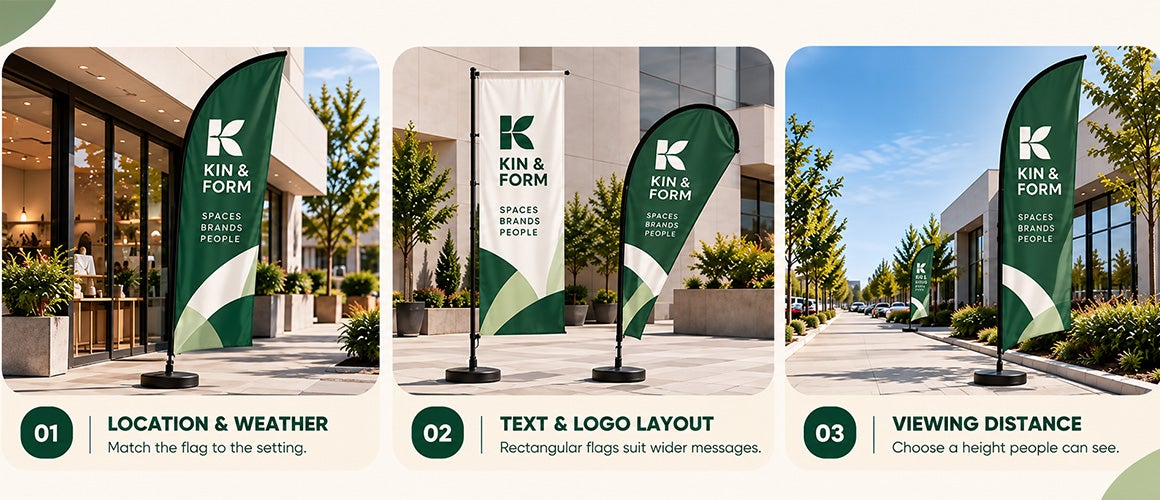
- Location & Weather: Indoor trade show booths need high-tension options like teardrop designs so graphics don’t sag. Highway setups need tall, fluttering shapes that catch eyes from far away.
- Text & Logo Layout: Got a lot of copy or wide logos? Go with rectangle flags so your words don’t get chopped off by rounded edges.
- Viewing Distance: If you’re targeting fast-moving highway traffic, giant flags with massive vertical footprints ensure drivers catch your message before they pass.
- Brand Vibe: Modern tech companies and corporate events look great with blade profiles. Casual festivals and outdoor markets pair better with sail or feather setups.
What Are Real-World Examples of Effective Flag Usage?
Seeing how other businesses deploy flags makes it much easier to decide:
- Car Dealership Row: A local auto mall set up 12 sail banners along their main highway fence. The extra motion bumped drive-by weekend visitor traffic by 18%.
- Fitness Expo Booth: A supplement brand used double-sided teardrops inside a brightly lit hall. The tight fabric eliminated glare and kept their logo sharp from across the room.
- Sidewalk Bistro: A downtown café dropped two feather flags near their patio entrance, helping foot traffic spot their daily lunch specials instantly.
What Steps Ensure a Seamless Ordering Process?
Before you order your next batch of promotional flags, run through this short setup checklist:
- Check Your Surface: Use steel ground stakes for grass or soil. Pick heavy cross-bases with water bags for concrete and indoor floors.
- Choose Single vs. Double-Sided: Double-sided flags include a middle blockout layer. This stops your text from looking backwards on one side when light shines through.
- Submit Vector Artwork: Always upload sharp vector files (.AI or .EPS) so your graphics don’t turn blurry when printed large.
- Build a Complete Setup: Match your flags with an overall outdoor display system like pop-up canopy tents or banner stands for a clean, unified look.
Conclusion
Choosing the right flag shape comes down to matching your graphics with your location. Whether you need the gentle motion of a feather design, the rigid tension of a teardrop, or the wide printing space of a rectangle, picking the right contour ensures your brand gets noticed. Take a look at your installation spot, check your design layout, and pick the shape that delivers the best visibility for your business.
Frequently Asked Questions
Q. Which flag shape performs best in high-wind conditions?
A. Teardrop and sail shapes handle wind best. Their curved tops and tight fabric setups reduce heavy flapping, which protects the pole from snapping in strong gusts.
Q. Can I use the same pole set for different flag shapes?
A. Usually no. Every shape requires a specific top pole piece, like a flexible curved rod for teardrops versus a straight elbow arm for rectangular designs.
Q. Should I choose single-sided or double-sided flag printing?
A. Double-sided is almost always better for outdoor street placement. It makes sure people walking or driving from both directions read your message clearly.
Q. How long do outdoor advertising flags typically last?
A. High-quality polyester flags with UV-resistant ink usually last anywhere from 1 to 3 years outdoors, depending on your local weather and how often you bring them inside during storms.