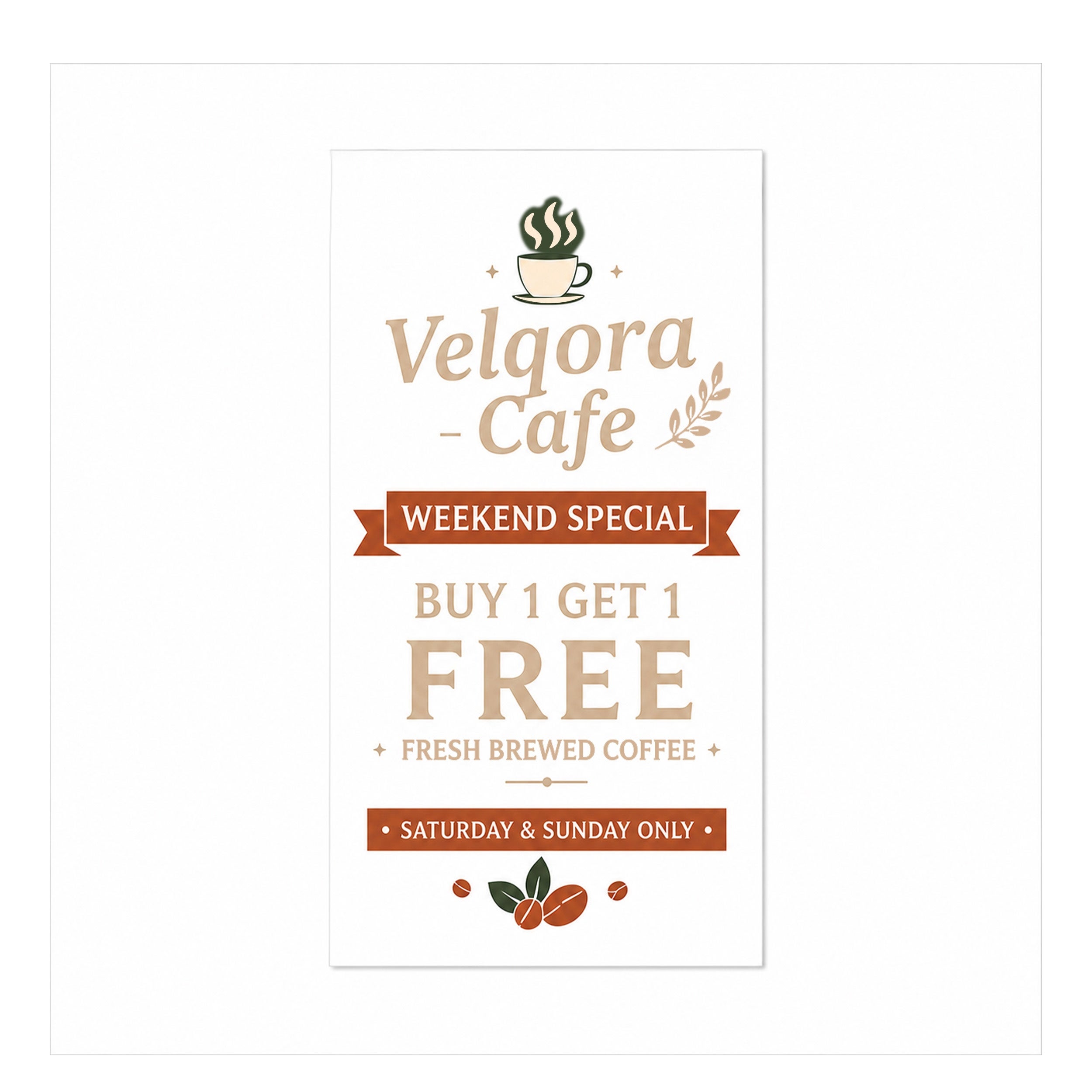
Let’s be real: our attention spans in 2026 are officially shorter than a TikTok transition. We live in the “skip ad” era, where even a 10-second reel feels like a commitment. But while digital ads are fighting for a fraction of your screen, physical posters are pulling a “classic vinyl” move; they’re staying relevant because they actually exist in the real world. They don’t disappear when your Wi-Fi glitches or when you refresh your feed.
Think of a killer poster as the main character of a street corner. Whether it’s a vibe-heavy cafe in a busy lane or a high-tech booth at a trade show, a great poster doesn’t just sit there; it commands the room. It’s that rare marketing tool that doesn’t feel like an intrusion; it feels like part of the scenery.
But here’s the tea: you can’t just “copy-paste” your digital flyer onto a large sheet and call it a day. In a world saturated with visual noise, your design needs to be as sharp as a Netflix teaser. You have to give people a reason to look up from their phones. It’s about choosing one “hero” message and making it pop so hard that even someone rushing to catch their metro has to do a double-take.
Nailing visibility this year is about more than just pretty colors; it’s about “stop-and-stare” psychology. You’ve got to channel that same energy that makes a movie poster go viral before the trailer even drops.
Ready to move beyond the boring? Let’s dive into the aesthetics and strategies of poster design ideas that will make your designs the most talked-about thing on the block.
Popular Products
What Makes a Poster “High-Visibility” in 2026?
A high-visibility poster is one that grabs attention quickly and communicates its message with minimal effort. Modern audiences are exposed to countless visual messages every day, so effective posters must work within seconds.
The first requirement is immediate attention. Strong colors, bold headlines, or striking visuals help stop people as they walk past. Once attention is gained, the message must be clear. A viewer should understand the purpose of the poster almost instantly, whether it promotes a sale, event, product launch, or awareness campaign.
Visual hierarchy also plays an important role. Good posters guide the eye naturally from headline to image to call to action. Instead of overwhelming viewers with too many elements, they prioritize one main message.
Finally, a high-performing poster encourages action. This could mean scanning a QR code, visiting a store, booking an event, or remembering a brand. Visibility alone is useful, but visibility combined with response creates real marketing value.
Poster Design Ideas That Actually Get Noticed in 2026
1. Minimalist Poster Design Ideas
Minimalist poster design continues to perform well because it removes distractions and focuses attention on what matters most. Instead of filling space with multiple graphics and heavy text, minimalist posters rely on clean layouts, one key visual element, and concise messaging. This style works especially well for luxury brands, premium services, technology companies and modern lifestyle products. Clean design often signals confidence and quality, making it attractive to professional audiences.
For example, a tech brand launching a new product might use a dark background, one product image, and a short headline such as “Designed for Tomorrow.” The most common mistake with minimalist posters is confusing simplicity with emptiness. A design still needs a focal point and clear purpose. White space should guide attention, not create confusion.
2. Bold Typography Poster Ideas
Typography-led posters are highly effective when the message itself is the most important element. Large, bold text can be read quickly from a distance, making this style ideal for sales promotions, announcements, public awareness campaigns and urgent notices. Retailers often use this approach during seasonal campaigns with headlines such as “50% OFF THIS WEEKEND” or “LAST 2 DAYS TO SAVE.” The strength of the design comes from instant readability.
To make this style successful, use no more than one or two fonts. Strong font contrast between headline and supporting text helps create hierarchy. A common mistake is choosing decorative fonts that look stylish but are difficult to read. If people cannot understand the message immediately, the poster loses impact.
3. Retro & Vintage Style Poster Design Ideas

Retro-inspired posters remain popular because nostalgia creates emotional connection. Vintage colors, old-school typography, textured graphics and classic layouts can make a poster feel memorable and inviting. This style works well for food businesses, cafes, beverage brands, live music promotions, and lifestyle campaigns.
For example, a burger restaurant promoting a new combo meal could use a 70s-inspired poster with warm colors and playful typography. The key to success is balancing vintage aesthetics with modern readability. Use retro tones and graphics, but keep spacing clean and messaging clear.
4. Gradient & Neon Poster Design Ideas
How to design a poster with gradient and neon visuals involves understanding that these effects are particularly effective in environments where posters compete with heavy visual noise. Bright glowing effects naturally attract attention, especially in nightlife districts, campuses, gaming spaces, concerts and youth-focused campaigns. These designs often appeal to Gen Z audiences because they feel energetic, modern and digitally influenced. A music event poster, for example, might use neon pink and blue gradients with a bold event date.
Dark backgrounds usually help neon colors stand out more effectively. However, balance is important. Too many glowing elements can reduce readability and make the poster feel chaotic. Used correctly, this style creates excitement and draws viewers quickly.
5. Photo-Centric Poster Design Ideas
Photo-driven posters rely on strong imagery rather than heavy design elements. A compelling product image, food shot, smiling customer or property photo can communicate faster than paragraphs of text. This makes photo-centric posters ideal for ecommerce promotions, retail stores, restaurants, travel campaigns and real estate marketing. People trust visuals when making decisions, especially if the image feels authentic and high quality.
For example, a real estate poster showing a bright modern apartment with a clean headline like “Move In This Summer” can generate immediate interest. Low-quality or generic stock photos are the biggest risk with this style. The image must feel credible and visually sharp.
6. Illustrated & Custom Artwork Poster Design Ideas
Illustrated posters help brands look original and creative. Instead of relying on common stock imagery, custom artwork creates a unique visual identity that viewers remember. This style is ideal for creative agencies, children’s events, festivals, nonprofit campaigns and storytelling-based brands. It also works well when a business wants to communicate personality rather than just promotion.
For example, a bookstore campaign could feature illustrated characters and imaginative scenes around a headline promoting reading week. The key is consistency. Illustrations should reflect the brand tone, not feel random or disconnected from the message.
7. Infographic Poster Design Ideas
Infographic posters are useful when the goal is education or awareness. They combine visuals, icons, numbers and concise copy to make information easier to understand. Schools, healthcare organizations, government campaigns, HR departments and sustainability initiatives often benefit from this style. Topics such as hygiene awareness, recycling steps or event schedules can be communicated effectively through infographic design.
The best infographic posters focus on a small number of points. Too much data creates clutter and reduces engagement. When done well, viewers leave informed without feeling overwhelmed.
8. Interactive Poster (QR / AR Enabled) Design Ideas

Modern posters no longer need to remain static. Interactive posters using QR codes or augmented reality create measurable engagement and bridge offline attention with digital action. A restaurant can use a QR code for menu ordering. A trade show brand can link to a product demo. A retail poster can unlock a discount coupon after scanning.
This style works because it turns passive viewers into active participants. However, users need a reason to scan. Offering incentives such as discounts, free resources, registrations or exclusive previews improves response rates. The QR code should be clearly visible, easy to scan and supported by simple instructions.
9. 3D & Illusion Poster Design Ideas
3D-inspired posters use perspective, shadowing and optical tricks to create curiosity. Since unusual visuals naturally interrupt normal walking patterns, this style is highly effective in malls, transit zones, events and high-footfall locations.
For example, a fitness brand could create a vinyl poster where dumbbells appear to break through the wall, immediately drawing attention. These designs must still support the message. If the illusion becomes the only thing viewers notice, branding can be lost. Strong 3D visuals should always work together with a clear headline or CTA.
10. Hyperlocal & Personalized Poster Design Ideas
Localized poster marketing is becoming increasingly valuable in 2026 because relevance drives attention. When people feel a message is meant for their area, community or lifestyle, they are more likely to notice it. Local businesses can reference neighborhood names, landmarks, weather, local slang or seasonal habits.
For example, a café might promote “Your Delhi Monsoon Coffee Break.” This approach works especially well for restaurants, gyms, retail stores, salons, clinics and service businesses. The key is authenticity. Forced references can feel artificial, while genuine localization feels personal.
Poster Design Trends for 2026
Poster design trends continue to evolve alongside digital aesthetics and consumer preferences. AI-assisted design systems are helping brands create layouts faster while still allowing customization. Motion-inspired static visuals mimic movement through shapes and direction, helping posters feel dynamic.
At the same time, maximalism is returning with bold layering, oversized text, and expressive graphics. Anti-design and brutalist styles are also growing because they feel disruptive and unconventional.
Sustainability is another key trend. Brands increasingly highlight eco-friendly materials and responsible messaging. Mixed-media posters combining photography with illustration are also gaining popularity because they feel modern and visually rich.
Design Principles That Increase Poster Visibility
1. Color & Contrast That Grab Attention
Color is one of the fastest ways to attract the eye. High contrast combinations improve readability and help important elements stand out. Bright colors often perform well in crowded retail zones or outdoor spaces, while darker palettes can create a premium and sophisticated look. The best choice depends on your setting and audience. Contrast matters more than using bright colors alone.
2. Typography That Works From Distance
Posters are often viewed while walking or from several feet away. If typography is too small or overly decorative, the message gets lost. Use large headlines, clear sans-serif fonts and strong spacing. Supporting text should remain minimal. Most posters only need one dominant headline and one smaller secondary line. Readable typography is one of the biggest factors behind poster success.
3. Layout & Visual Hierarchy
An effective layout guides attention naturally. Many successful posters use a simple structure:
– Headline
– Main visual
– Call to action
This creates a smooth reading flow. Without hierarchy, viewers do not know where to look first. A clean layout almost always outperforms a cluttered one.
4. White Space & Focus
White space gives content room to breathe. It helps important elements stand out and prevents the design from feeling crowded. Many businesses try to use every inch of poster space, but less clutter usually means faster understanding. Focus improves performance.
5. CTA Placement That Drives Action
Calls to action should feel obvious and easy to follow. Whether the next step is scanning a QR code, visiting a store, or calling a number, viewers should not need to search for it.
Position CTAs near natural eye paths and keep wording direct. Examples include:
- Scan to Book
- Visit Today
- Claim Your Offer
- Register Now
Strong CTAs convert attention into measurable results.
Poster Design Ideas by Use Case
1. Retail Posters: Retail posters perform best when they create urgency. Limited-time discounts, seasonal offers and new arrivals are common themes. Bold typography and high-contrast colors usually work well in storefront windows.
2. Restaurant Posters: Restaurant posters should trigger appetite and curiosity. High-quality food imagery, tempting headlines and clean pricing help drive quick decisions.
3. Real Estate Posters: Real estate posters need to build trust. Clean layouts, quality property images and clear contact details are essential.
4. Event Posters: Event posters should create excitement. Vibrant visuals, date clarity and speaker or performer highlights help increase attendance.
5. Healthcare Posters: Healthcare communication must prioritize clarity. Structured layouts, calm visuals and readable text help build confidence and understanding.
6. Education Posters: Education posters often perform best as infographic layouts. They simplify information and support learning environments.
How to Promote Your Poster for Maximum Visibility
1. Strategic Placement: Even great designs fail in poor locations. Posters should be placed where people naturally pause, queue, enter, or wait. Eye-level placement usually increases visibility. It is also important to choose the right size for your poster based on the distance from which it will be viewed.
2. Offline & Online Integration: Extend poster reach by sharing the same creative on social media, email campaigns and landing pages. This builds consistency and repetition.
3. QR Code Strategy: Trackable QR codes help measure scans, visits and conversions. They make offline campaigns more data-driven.
4. A/B Testing Poster Designs: Testing different versions of headlines, colors, visuals or CTA placement can reveal what performs best. Small changes often create major response improvements.
Common Poster Design Mistakes to Avoid
Many posters fail because they try to say too much at once. Here’s a crisp overview:
- Too much text creates confusion.
- Poor contrast reduces readability.
- Weak CTAs waste attention.
- Low-resolution images hurt trust.
- Ignoring viewing distance makes text useless.
All in all, the key to any strong posters is to keep any info, text and graphic simplified, instead of cramping it all in at once.
Conclusion
Poster marketing continues to deliver results because it reaches people in the physical world where attention can still be captured instantly. But visibility today requires more than decoration. It requires strategic design, clear messaging, strong placement, and a purpose-driven call to action.
Whether you want to promote a sale, launch an event or build awareness for your business, the right poster can turn everyday spaces into marketing opportunities.
FAQs
1. What makes a poster attractive?
Answer. A poster becomes attractive when it combines strong visuals, readable typography, balanced spacing and one clear message.
2. What size poster is best for visibility?
Answer. The best size depends on placement. Large posters suit outdoor or spacious environments, while medium sizes work well indoors or in windows.
3. How do I design a poster that stands out?
Answer. Use bold contrast, one memorable headline, clear hierarchy and strategic placement.
4. What colors attract attention in posters?
Answer. Bright and contrasting colors such as red, yellow, orange, black and white combinations often attract attention quickly.
5. Are posters still effective in 2026?
Answer. Yes. Posters remain highly effective for local marketing, retail promotion, events, brand awareness and trade show visibility.