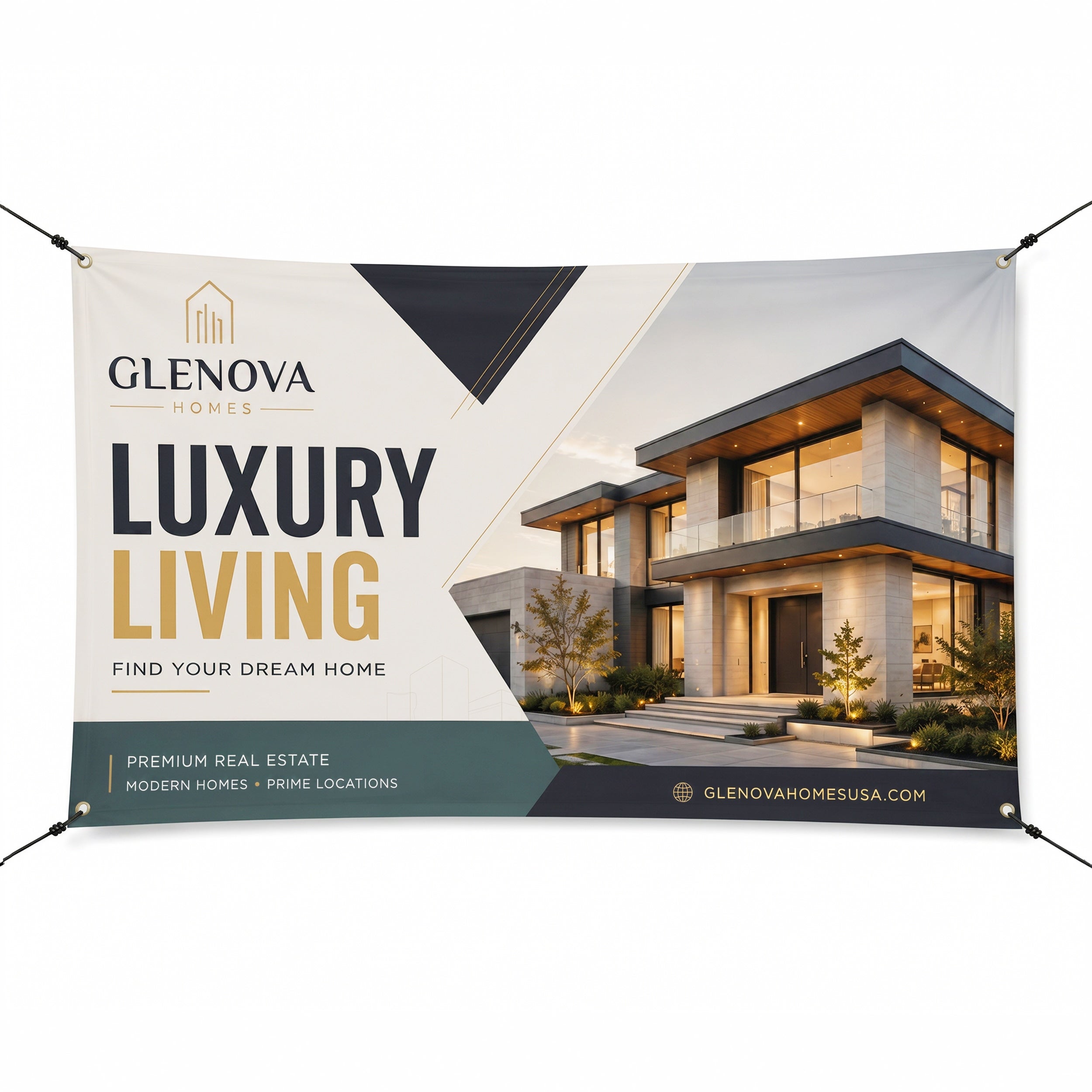
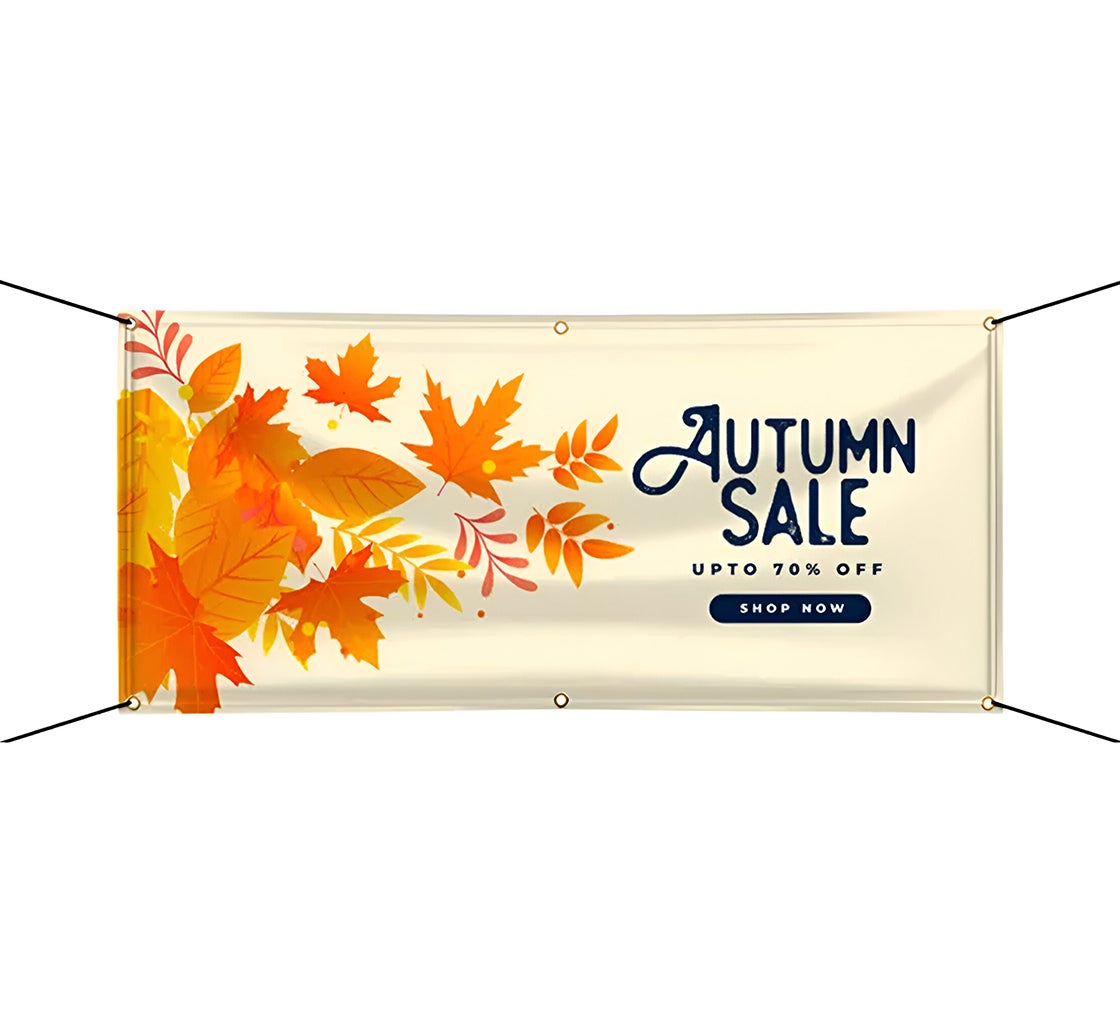
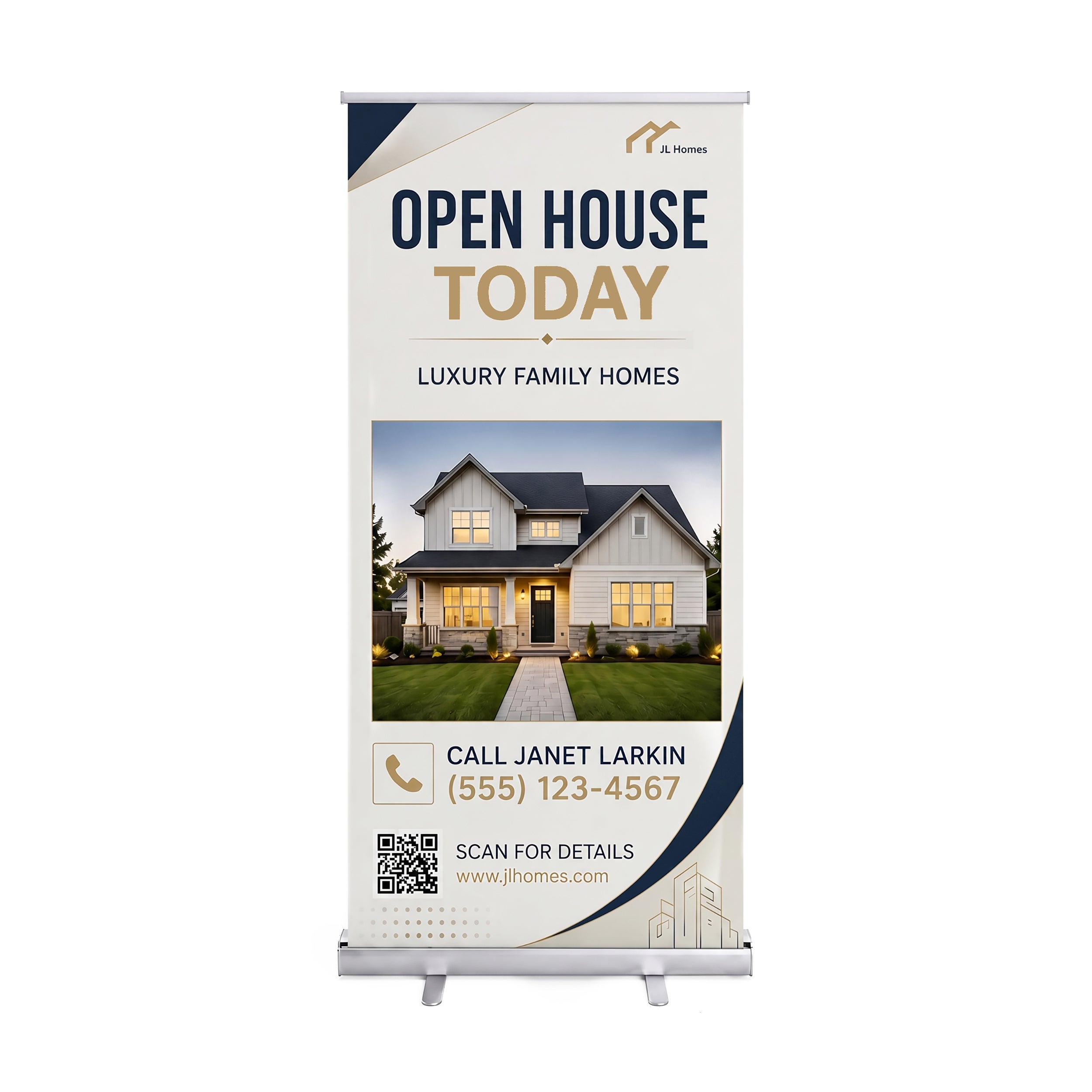
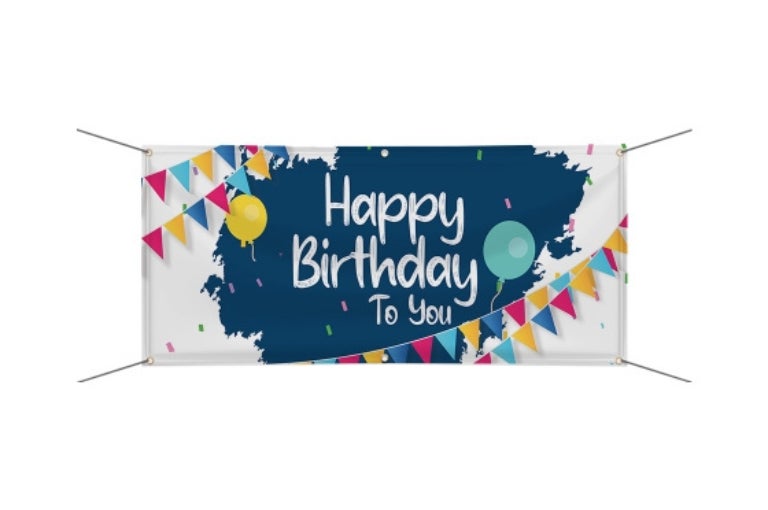
A banner is a bit like a stage performer. Even with the best lines, the best costume, and perfect timing, the performance falls flat if nobody in the room can actually see it properly.
That is exactly what happens when the size is wrong.
A banner that is too small gets swallowed by the space around it. One that is too large can feel clumsy, expensive, and oddly out of place. The same design that looks sharp at an exhibition booth might feel completely wrong above a narrow storefront, while a banner made for a shop window could vanish the moment you place it in a large event hall.
That is why banner sizes are important. It shapes how the message is seen, how the design feels, and whether the banner actually does the job it was made for.
Most people start with the artwork. The colors, the logo, the headline, the offer, and the layout. All of that matters, of course. But none of it works if the banner is the wrong fit for the space. Before anything else, it needs to feel proportionate, readable, and placed with some purpose.
This guide is here to help with exactly that. We are going to break down the most useful banner sizes, look at where they work best, clear up the confusion around standard formats, and make it much easier to choose a banner that looks right and works hard in the real world.
Popular Products
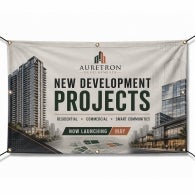


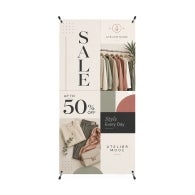
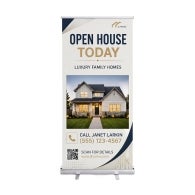
Why Banner Size Matters More Than People Think
When people hear “size,” they usually think only in terms of cost. Bigger means more expensive. Smaller means cheaper. But that is only half the story.
The real issue is visibility.
A banner is supposed to do one thing before anything else: get noticed. That does not happen automatically. The right size affects readability, visual impact, and even whether the message gets a chance to work in the first place. If the headline is too far away to read, the banner is not doing its job. If the design is forced into a tiny format with too much information, the whole thing starts to feel cramped and forgettable.
This is why banner dimensions matter so much. The right scale gives the message room to breathe. It helps the text, graphics, and brand elements feel balanced instead of crowded.
In other words, size affects performance just as much as design.
What Counts as Standard Banner Sizes?

When people talk about standard banner sizes, they usually mean the formats printers work with every day for shops, events, and regular business use. These sizes are popular for a reason; they are easier to order, easier to display, and much easier to design around.
That does not mean anything outside those sizes is a bad idea. It just means standard options tend to be more practical because they fit the display systems and printing setups most people already use.
For anyone ordering a banner for the first time, that makes life much easier. Starting with a standard size clears up a lot of the guesswork and helps you figure out much faster whether you really need something custom or not.
Common Banner Categories by Size
There is no single size that works for everything, which is why it helps to think in categories.
Small Banner Sizes
These usually work best for counters, small walls, indoor directions, short-term promotions, or places where people will be viewing the banner from fairly close range. They are useful when space is limited and the message is simple.
Medium Banner Sizes
This is the category most people end up choosing. Medium formats usually strike the best balance between cost, readability, and flexibility. They work for shops, indoor events, pop-ups, welcome signage, and promotional displays without feeling either too tiny or too overpowering.
Large Banner Sizes
These are the ones built to be noticed from a distance. Outdoor branding, stage backdrops, building fronts, large event entries, and busy public spaces usually need much more scale. Large banner sizes work best when the banner needs strong visibility, not subtlety.
The key thing is not which category sounds more impressive. The key thing is which category suits the space.
Standard Banner Size Chart
Here is a simple standard banner size chart you can actually use:
| Banner Type | Common Size | Best For |
| Small indoor banner | 2 ft x 4 ft | Counters, indoor notices, local promos |
| Medium display banner | 3 ft x 6 ft | Shop displays, events, temporary advertising |
| Large outdoor banner | 4 ft x 8 ft | Fence displays, outdoor branding, large promotions |
| Wide event backdrop | 8 ft x 10 ft | Stage backgrounds, large event branding |
| Roll-up display | 33 in x 80 in | Exhibitions, receptions, trade shows |
| Pole-mounted street banner | 24 in x 60 in or 30 in x 72 in | Lamp posts, street promotions, public events |
This is not the only chart in the world, but it gives a practical starting point for most use cases.
Understanding Banner Printing Sizes
When people compare banner printing sizes, they are usually balancing three things at once: how much space they have, how far away the banner will be seen from, and how much content needs to go on it.
That last part matters more than people expect.
A focused message often allows for a smaller banner, featuring just a logo, one line, and a web address. A banner that includes opening times, a headline, multiple services, a call to action, and a QR code requires significantly more space to remain readable. So the design itself should affect the size choice.
This is also why printing decisions should not happen after the artwork is finished. Size needs to be part of the conversation from the beginning.
Best Banner Sizes for Shops
A banner size for shop use depends a lot on where it will be placed.
If it is placed inside a window where people walk closely past, you usually do not need something large. A medium-sized banner often works well there because the viewer is already near enough to read it. But if the banner is going above the storefront or across a wide entrance, then the scale needs to increase so the message holds up from the pavement or the road.
For smaller shops, a 3 ft x 6 ft banner is often a practical sweet spot. It gives enough room for branding and offers details without taking over the whole facade. For broader exteriors, 4 ft x 8 ft or larger may make more sense.
The main question is always the same: how far away will someone be when they first need to notice it?
Retractable Banner Sizes and Why They Work So Well Indoors
This is one of the most useful categories because it solves a very specific problem. Sometimes you need something professional, portable, and easy to set up without drilling holes or building a whole display.
That is exactly why retractable banner sizes are so popular.
The most common size is around 33 inches x 80 inches, though there are wider and narrower versions depending on the setup. This format works well because it is tall enough to get attention while staying narrow enough to fit into lobbies, event corners, conference halls, reception areas, and pop-up booths.
These are especially effective when used with banner stands because the whole system is built around convenience. Set it up, roll it out, and it is ready.
That is also why so many brands rely on retractable banners for trade shows, exhibitions, networking events, and indoor promotions. They look polished, they travel well, and they do not ask for a complicated installation.
If someone is looking for a classic indoor event display, a roll up banner is usually one of the safest answers.
Vinyl Banner Sizes and Outdoor Use
If the banner is going outside, the material matters just as much as the size. A vinyl banner is one of the most common choices because it handles weather better than many lightweight alternatives and tends to hold color well.
When people talk about vinyl banner sizes, they are usually dealing with shopfronts, fences, event entries, building walls, school grounds, sports promotions, and roadside visibility. Those are not settings where tiny banners do well.
Outdoor banners often start around 3 ft x 6 ft and go up quickly from there. A 4 ft x 8 ft banner is common for stronger visibility, while larger custom pieces are often used for building wraps or event backdrops.
This is also where vinyl banners become such a practical option. They are durable, familiar, and versatile enough for both promotional and informational use.
Pole Banner Sizes and Street-Level Visibility
Pole banners are a very specific category, and they need to be treated differently from wall banners or shop displays.
Pole banner sizes are usually tall and narrow because they are designed to hang from street poles, lamp posts, or public-facing supports. Common formats include 24 in x 60 in and 30 in x 72 in.
These work especially well for festivals, seasonal promotions, shopping districts, public events, and civic campaigns because they create repetition. One banner on its own may not do much, but a line of matching banners down a street starts to feel much more visible and intentional.
This is also one of the clearest examples of why proportion matters. A short, wide banner would look completely wrong in that kind of space.
When Custom Sizes Make Sense
There are plenty of situations where custom banner sizes are worth considering.
Sometimes the wall is wider than usual, the space above the shop entrance has awkward proportions, or the event backdrop needs to match the stage exactly. Standard options can also leave too much empty space or crop the design in a way that just does not look right.
That is when going custom actually makes sense.
The mistake people make is assuming that custom automatically means better. It does not. It just means more tailored. If a standard size works, it usually saves time and money. But when the installation space is specific enough, custom banner printing can be the better call because it lets the display feel deliberate rather than improvised.
The best approach is not to choose custom because it sounds premium. Choose it because the space genuinely needs it.
How to Choose the Right Size for Your Space

There is no magic formula, but there is a straightforward way to think about it.
1. Start with Purpose
What is the banner doing? Welcoming guests? Promoting a sale? Directing traffic? Sitting behind a speaker? Hanging in a shop? Size follows function.
2. Think About Viewing Distance
Viewing distance is one of the biggest factors in how to choose poster size and banner size alike, though here the visibility challenge is often even stronger. A banner meant to be seen from across a road needs far more scale than one placed at the entrance to a room.
3. Measure the Actual Space
Do not guess. Measure. A banner that looks fine in your head can feel tiny or awkwardly oversized once it meets a real wall, pole, booth, or storefront.
4. Look at the Content
Heavy text needs more room. Simple, bold messages can work at smaller sizes. If the design is visually dense, the format needs to support it.
5. Consider Setup and Transport
A giant outdoor banner may look fantastic, but if it is going to be carried to five different events in a hatchback, that matters too. Practicality counts.
Design Matters More as the Banner Gets Bigger
One common mistake is assuming that bigger banners are easier because they have more space. Sometimes they are actually harder.
The larger the format, the more obvious weak hierarchy becomes. Tiny logos floating in a huge field. Small text lost in wide empty space. Too many details fighting for attention. All of that becomes much more visible once the banner is scaled up.
That is why the design needs to respect the size.
Smaller banners need discipline because there is less space. Bigger banners need discipline because wasted space becomes more obvious. Good layout is never optional.
Final Thoughts
Choosing the right banner size is not really about memorising numbers. It is about understanding what the banner needs to do and where it needs to do it.
A small indoor promo, a shopfront offer, a trade show display, a street-pole campaign, and a stage backdrop all live in completely different worlds. That is why the size has to match the job, not just the artwork.
So before you print anything, step back and ask the obvious questions. How far away will people be? What is the main message? How much space do you actually have? Is this meant to be temporary, portable, weatherproof, or permanent?
Once those answers are clear, the right size usually becomes much easier to spot.
And that is the whole point. Good banners are not just designed well. They fit their space well too.